
SWIFTIES
What’s Your Era?
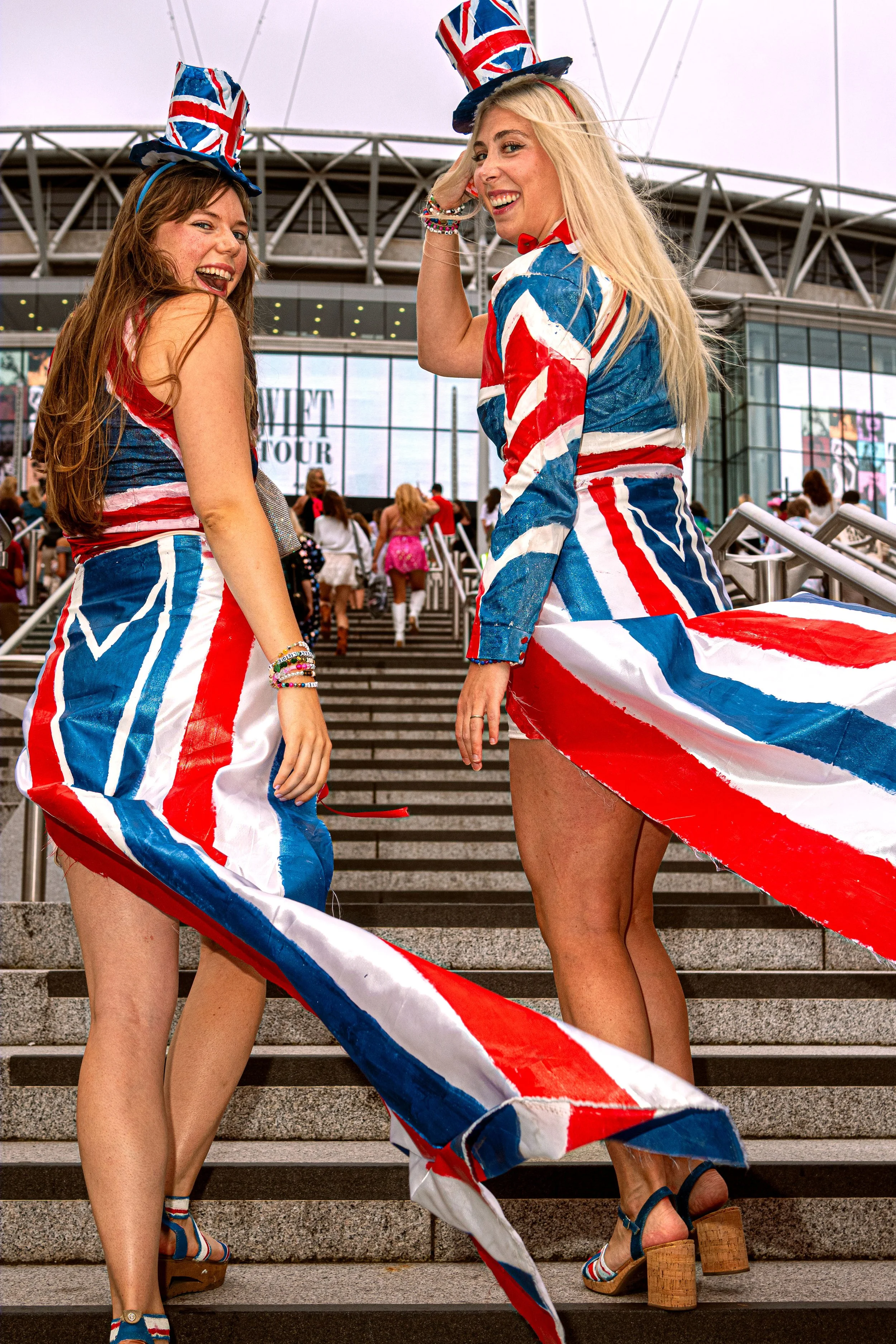
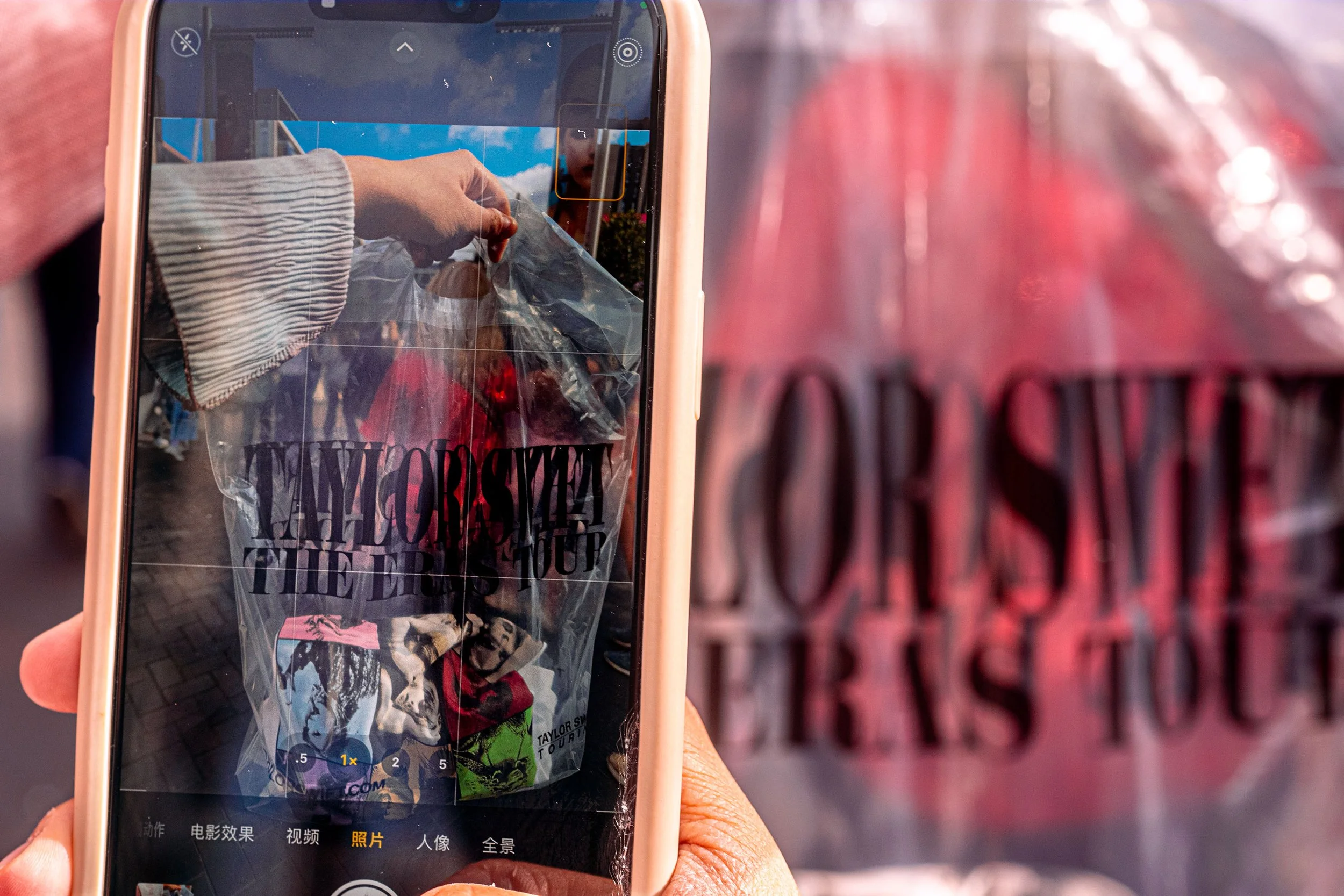
Taylor Swift’s Eras Tour turned the audience into part of the production. At Wembley, fans arrived dressed as their chosen era: cowboy boots, sequins, black leather, pastel dresses, hand-painted jackets and slogan T-shirts. Friendship bracelets changed hands, lyrics appeared on clothing, and strangers recognised one another through a shared language of songs, colours and references. The outfits were not simply costumes. They were a way of declaring where you belonged. This series is about the fan culture that grew around the music, and the spectacle created when thousands arrive dressed for the part. Swifties don’t just listen to the music; they wear it.
















SWIFTIES
What’s Your Era?
As Taylor Swift’s Eras Tour swept across the globe, it became a cultural and economic event on a scale few concerts have matched. By the end of 2024, it was on track to gross more than $1 billion. Economists began talking about the “Swift effect” and “Swiftenomics”, while there was even speculation that the spending surrounding the tour had influenced debate around the Bank of England’s decision to hold off an August interest-rate cut.
With 1.2 million fans attending concerts in the UK, each spending an estimated £848 on the wider concert-going experience, the tour created a short-term surge in consumer spending and inflation. At the same time, Taylor’s latest album was conquering the charts in more than 25 countries. Her songs explored familiar themes of love, heartbreak and self-discovery, as the music of artists before and around her had done. But only a handful of performers have managed to create such a powerful point of identification. The cultural impact of the Eras Tour was so profound that it seemed to make the globe smaller, or at least bring it together under one giant Swiftie flag.
Behind the marketing machine was Taylor’s ability to make fandom feel personal. A decade earlier, when Tumblr was still a thing, she was already mastering the art of fan engagement. During “Swiftmas”, she sent presents to 32 fans. By the time of the Eras Tour, she was speaking to more than 280 million Instagram followers as casually as if they were part of one enormous group chat. The term “Swiftie” was coined by her fans, a detail she later discussed in her documentary, before formally protecting the name in 2017.
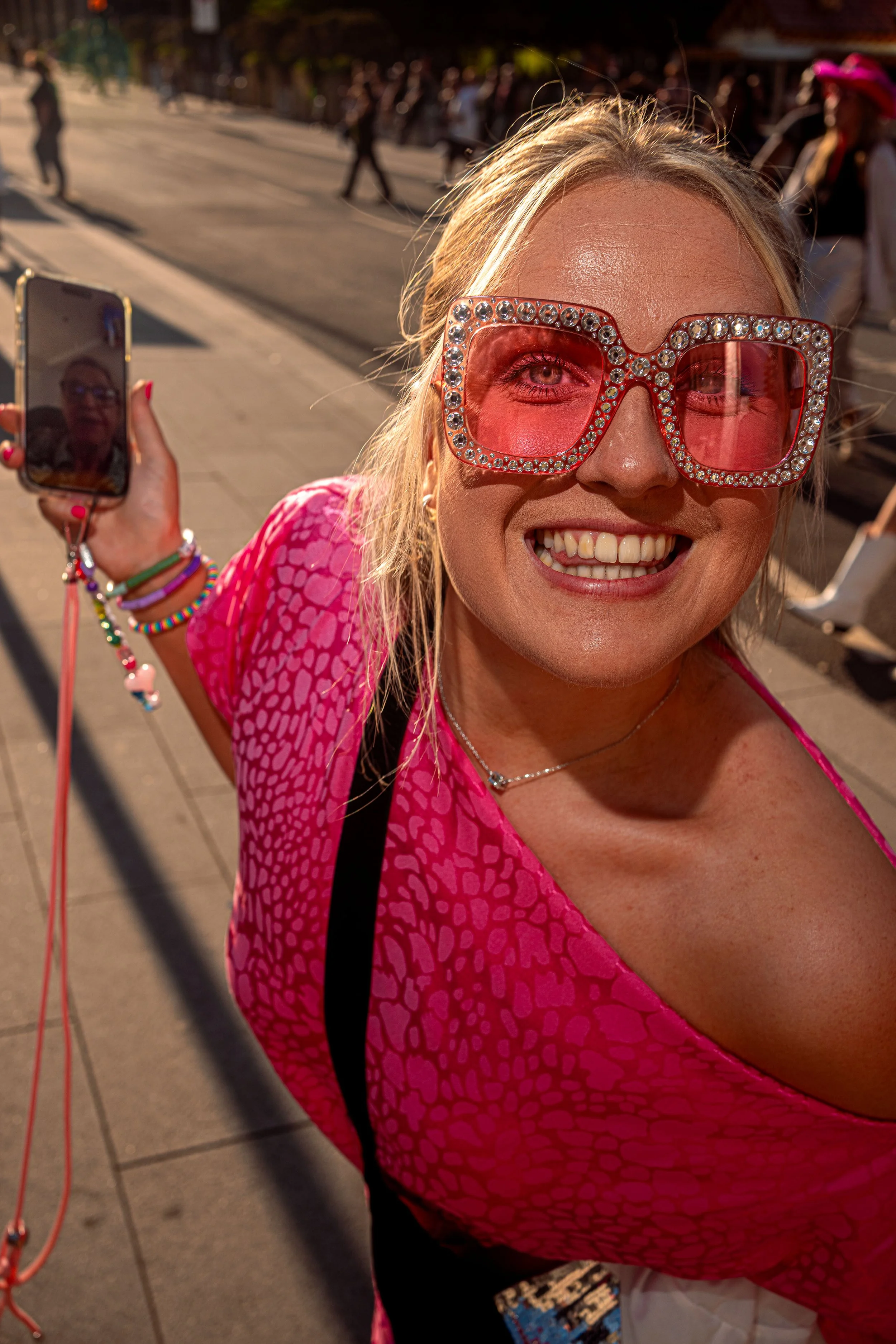
This era was not just about Taylor. It was about the fans. Swifties did not simply listen to the music; they wore it. They became living, breathing Taylor Swift mood boards, turning the different stages of her career into a vibrant fashion culture of their own. Every musical era inspired a distinct style, embraced and reinterpreted by fans with enthusiasm. These were not costumes. They were expressions of belonging and celebration, a visible sign of the connection fans felt to Taylor and her work.
The authenticity of that community is fascinating from a social-documentary photographic point of view. It is a world in its own right, with its own language, references and codes of belonging. Concerts are where Swiftie culture truly shines. For Taylor, fashion and music are inseparable, and that combination plays a crucial role in the story of one of the most influential artists of her generation.
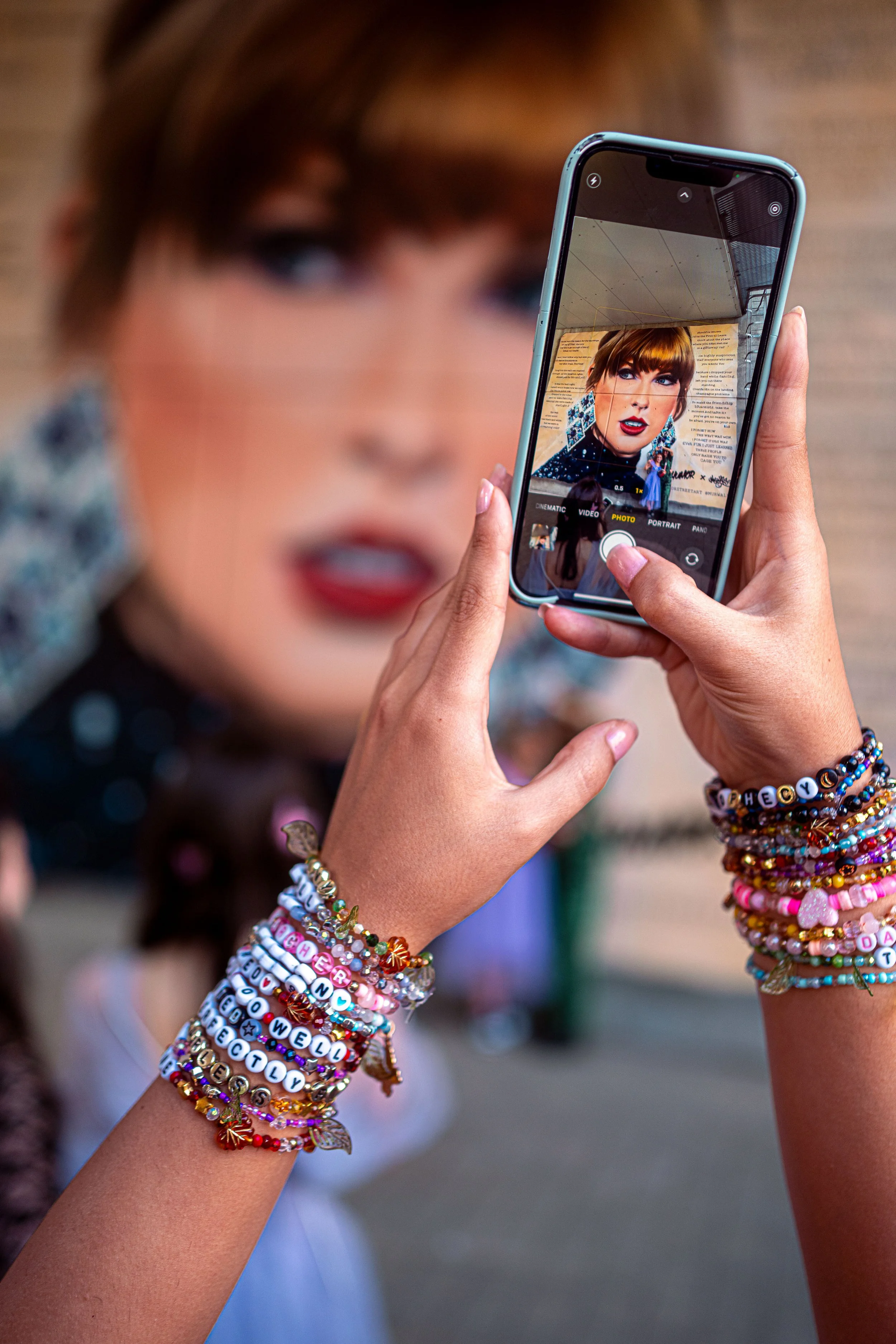
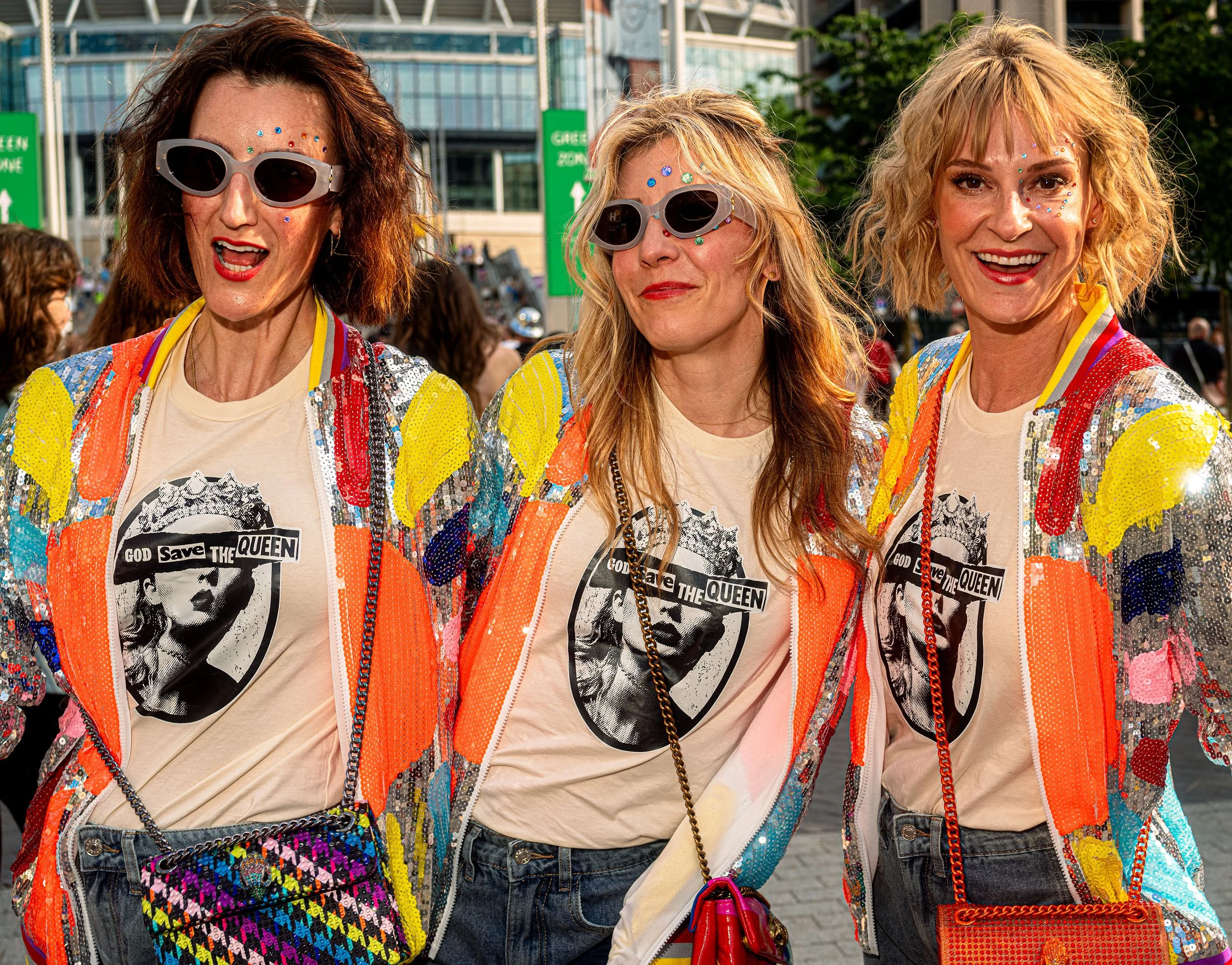
Going to a Taylor Swift concert is not simply about hearing the music. It is about dressing as your favourite Taylor era. Fans arrived in the cowboy boots of Fearless, the black leather of Reputation, the vintage glamour of 1989, the pastel dreaminess of Lover and the cosy cottage-core styling of Folklore. Some wore prom dresses recalling “You Belong With Me”. Others arrived in outfits inspired by lyrics, album artwork or a personal interpretation of the era that meant the most to them. The clothes were as recognisable as the songs themselves.
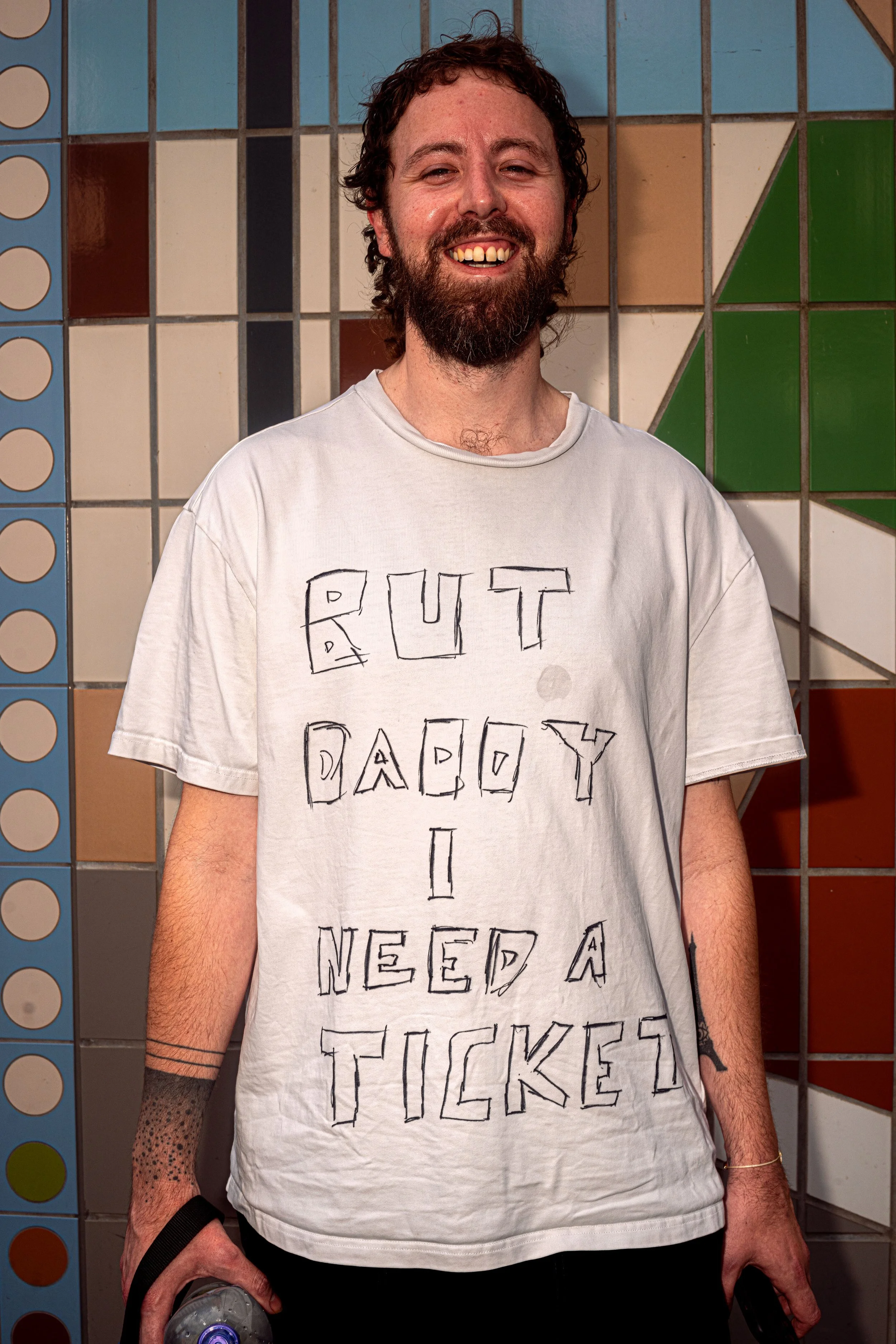
Taylor Swift slogan T-shirts often feature memorable lyrics, quotes and phrases from her songs, albums and public statements. They have become another way for fans to express their relationship with her music and persona. Alongside them are the long-suffering dads, a stand-alone T-shirt-wearing section of the audience, with slogans about paying for the tickets or “forking out” for the whole experience. Other dads received their own shout-out through the popular phrase, “But Daddy, I love him”. Her lucky number, 13, was often written in marker pen on fans’ hands.
The handmade friendship bracelets inspired by Midnights became a story in their own right. Nothing says “Swiftie for life” quite like trading homemade jewellery with strangers. The DIY aspect of Swiftie fashion was particularly striking. Fans poured their creativity into hand-painted jackets, customised trainers and handmade accessories featuring lyrics, song references and imagery from Taylor’s catalogue.
Some outfits were deliberately funny. One man wore a plain white T-shirt with handwritten words about “looking for a ticket”. Others carried homemade placards in a desperate attempt to get inside. Tickets were sold out, and the shortage itself became a form of communication. The familiar idea that you could not get a ticket for love or money became an internal joke, another shared reference within the Swiftie community.
In the Taylor Swift era, fashion is not just about clothes. It is about living inside the stories and emotions her music brings to life. Every outfit, bracelet, slogan and hand-painted detail becomes part of a much larger performance, one in which the audience is no longer watching from the outside. The fans are the show.